Workouts
Shoulder workout in the gym: 7 exercises and a beginner session
 By Arjun Thapa, strength trainer, 8 years training members
Updated
In short
- A complete shoulder workout has one overhead press, one side raise and one rear-shoulder move. Most beginners need nothing more.
- Beginners: 2 to 3 sets of 8 to 12 reps on presses, 12 to 15 on raises, 1 to 2 minutes rest, twice a week.
- Raises need light weights. Go heavy on presses, light on everything else. Progress rules are in our gym workout routine.
- Pain when you lift your arm overhead, at night, or with weakness: stop and see a physiotherapist.
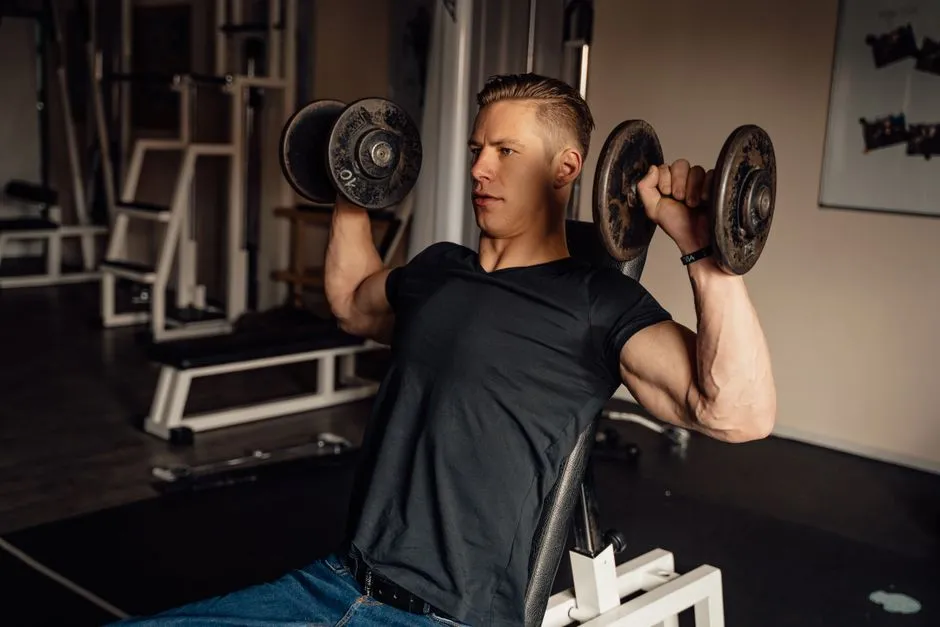
A good shoulder workout in the gym has three parts: an overhead press, a side raise and a rear-shoulder move. For a beginner, that means a seated dumbbell press, a lateral raise and a face pull, 2 to 3 sets each, twice a week. Below are 7 exercises to choose from, a 35-minute session, and the warm-up that keeps your shoulders healthy.
What a shoulder workout needs to cover
Your shoulder muscle (the deltoid) has three parts. Each one moves the arm in a different direction.
- Front delts lift your arm forward. They already work hard in every chest press.
- Side delts lift your arm out to the side. These give the shoulders their width.
- Rear delts pull your arm back. These are the most skipped, and the ones office workers need most.
Under the deltoid sits the rotator cuff: four small muscles that keep the ball of the shoulder in its socket. They don’t need heavy work, but they need a little, every session.
7 shoulder exercises in the gym, with sets and reps
The press rep range follows the ACSM position stand: loads you can lift 8 to 12 times for new lifters. Raises use lighter weights and a few more reps, because small muscles lose form fast when the load is heavy.
| Exercise | What it works | Beginner sets × reps | Form cue |
|---|---|---|---|
| Seated dumbbell shoulder press | Front and side delts, triceps | 3 × 8–12 | Back on the pad, dumbbells start at ear level, press up and slightly in. |
| Shoulder press machine | Front and side delts, triceps | 3 × 10–12 | Handles start at shoulder height. Don’t arch your lower back off the pad. |
| Dumbbell lateral raise | Side delts | 3 × 12–15 | Lead with the elbows, stop at shoulder height, lower for 2 seconds. |
| Cable lateral raise | Side delts | 2 × 12–15 each side | Cable behind your body, one arm at a time, slow and even. |
| Reverse pec deck | Rear delts, upper back | 2–3 × 12–15 | Chest on the pad, arms long, open wide, squeeze for one second. |
| Face pull (cable, rope) | Rear delts, rotator cuff, upper back | 2–3 × 12–15 | Pull the rope towards your eyes, hands end beside your ears, elbows high. |
| Band external rotation | Rotator cuff | 2 × 15 each side | Elbow tucked to your side, rotate the hand outwards. Very light band. |
A sample shoulder workout (about 35 minutes)
Rest 1 to 2 minutes between press sets, as ACSM suggests for 6 to 12 rep work, and about a minute between raise sets.
- Warm-up, 5 to 8 minutes. Easy cardio, 10 arm circles each way, 15 band pull-aparts, 15 band external rotations each side.
- Seated dumbbell shoulder press: 3 × 8–12.
- Dumbbell lateral raise: 3 × 12–15.
- Face pull: 3 × 12–15.
- Reverse pec deck: 2 × 12–15.
You can add this to the end of a chest workout if you cut it to the lateral raise and face pull. Your front delts already got their work from the pressing.
The 5-minute warm-up that saves your shoulders
The shoulder moves more than any other joint, which also makes it easy to irritate. Cold shoulders and a heavy press are a poor mix, especially on winter mornings in Kathmandu when the gym is still cold.
Do this before any upper-body day:
- Arm circles, 10 forward and 10 back.
- Band pull-aparts, 15 reps.
- Band external rotations, 15 each side.
- Wall slides, 10 reps: back against the wall, slide your arms up and down.
- One light set of your first press, 15 easy reps.
It takes 5 minutes and you can do it next to the dumbbell rack.
Common shoulder workout mistakes
- Lateral raises that are too heavy. If you swing your body or shrug, your traps are doing the work. Drop the weight.
- Arching back on the overhead press. It turns the press into an incline press and loads your lower back. Squeeze your glutes and keep ribs down.
- Pressing behind the neck. It puts the shoulder in a weak position. Press in front of your face.
- Only front and side work. Pressing works the front of the shoulder; the rear gets nothing unless you train it. Do at least as many face pull and reverse fly sets as press sets.
- Training shoulders the day after chest. Your front delts are still tired. Leave a day between them or train them together.
- Skipping the rotator cuff. Two light sets a session are enough.
How to progress your shoulder workout
On presses, follow the ACSM progression rule: when you can do 1 or 2 reps over your target, add 2 to 10% to the weight. In practice, move to the next pair of dumbbells and drop back to the low end of the rep range.
Raises are different. The jump from one dumbbell to the next can be big for the side delts. Add reps first, slow the lowering part to 3 seconds, then move up when 15 slow reps feel easy.
Shoulders fit best inside a full plan rather than a separate “shoulder day”. Our gym workout routine puts presses and raises on upper-body days with your back exercises, so pushing and pulling stay balanced.
When to stop and see a professional
These exercises are for healthy adults. If you have a heart condition, high blood pressure, diabetes, are pregnant or take regular medication, check with your doctor before you start lifting.
Stop and see a doctor or physiotherapist if you get:
- pain when you lift your arm overhead or out to the side, during or after training
- shoulder pain that wakes you at night
- weakness lifting the arm, or a feeling the shoulder is slipping out
- clicking or catching that comes with pain
- numbness or tingling down the arm
Don’t train through shoulder pain hoping it goes away. A trainer can change the exercises around an ache, but a hurting shoulder needs a proper diagnosis first.
Do you need a trainer for shoulders?
Not for the basics. A seated dumbbell press and a lateral raise are simple to learn.
A trainer is useful if you have had a shoulder injury before, your shoulders ache after pressing, or you want to learn the standing barbell press. Then it makes sense to train with a personal trainer for a few sessions to check your form and pick exercises that suit your shoulders. If you are new to the gym, a free trial visit is a low-pressure way to see the equipment first.
Want a plan built around this? Train with a personal trainer, or work out your numbers with the calorie calculator.
Sources

Arjun Thapa, strength trainer. Arjun coaches the squat, bench press and deadlift and checks the form of every new lift before it goes heavy.
Published 29 October 2026 · Updated 29 October 2026