Workouts
Gym back exercises: 8 moves for beginners, with sets and reps
 By Arjun Thapa, strength trainer, 8 years training members
Updated
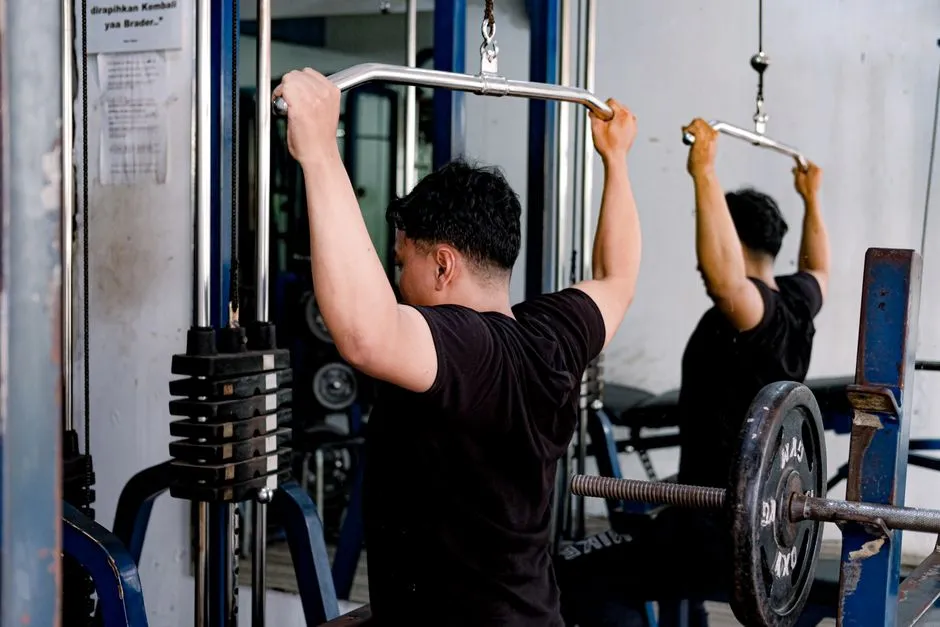
In short
- Start with a pull from above (lat pulldown), a pull from the front (seated cable row) and a hip hinge (back extension or Romanian deadlift). That covers most of the back.
- Beginners: 2 to 3 sets of 8 to 12 reps per exercise, 1 to 2 minutes rest, back work on 2 days a week.
- Add weight when you can do 1 to 2 reps more than your target. The full plan is in our gym workout routine.
- Sharp pain, pain down a leg, or numbness: stop and see a doctor or physiotherapist.
The best gym back exercises for a beginner are the lat pulldown, the seated cable row, the one-arm dumbbell row and the back extension. Do 2 to 3 sets of 8 to 12 reps of each, twice a week, and add weight in small steps. Below are the 8 moves, a ready-made session, and the mistakes that stop people feeling their back at all.
Which muscles does a back workout train?
Your back is a few big muscle groups, and each one likes a different direction of pull.
- Lats (the wide muscles under your armpits): trained by pulling down from above, like a pulldown or pull-up.
- Upper back (rhomboids, middle traps, rear shoulders): trained by pulling towards you, like a row.
- Lower back (spinal erectors): trained by hinging at the hips and standing back up, like a back extension.
A good back session has one of each. If you only do pulldowns, your upper back gets left out. If you only do rows, your lats get less work.
The 8 best back exercises in the gym, with sets and reps
The sets and reps follow the American College of Sports Medicine position stand, which suggests loads you can lift 8 to 12 times for people new to weights. Pick a weight that leaves 1 or 2 good reps in the tank.
| Exercise | What it works | Beginner sets × reps | Form cue |
|---|---|---|---|
| Lat pulldown | Lats, biceps | 3 × 10–12 | Pull the bar to your upper chest, elbows down and back. Lean back only a little. |
| Seated cable row | Upper back, lats | 3 × 10–12 | Sit tall, pull the handle to your belly button, squeeze your shoulder blades for one second. |
| One-arm dumbbell row | Lats, upper back | 2–3 × 10 each side | Hand and knee on the bench, flat back, pull the dumbbell towards your hip, not your ear. |
| Chest-supported row | Upper back | 2–3 × 10–12 | Chest stays on the pad. Lead with the elbows. No bouncing. |
| Assisted pull-up (machine or band) | Lats, biceps, core | 2–3 × 6–10 | Start from a dead hang, chest up, chin over the bar. Use enough help to keep every rep clean. |
| Back extension (45° bench) | Lower back, glutes, hamstrings | 2–3 × 10–12 | Hinge at the hips, stop when your body is in a straight line. Don’t swing up past it. |
| Dumbbell Romanian deadlift | Hamstrings, glutes, lower back | 2–3 × 8–10 | Push your hips back, dumbbells slide down your thighs, stop when your back wants to round. |
| Face pull (cable, rope) | Rear shoulders, upper back | 2 × 12–15 | Pull the rope towards your eyes, hands apart, elbows high. Light weight. |
You don’t need all 8 in one day. Choose 4 or 5 and rotate the rest in over the weeks.
A sample back workout for beginners (about 45 minutes)
This fits a lunch break or the hour after office. Rest 1 to 2 minutes between sets, which is what ACSM suggests for loads in the 6 to 12 rep range.
- Warm-up, 5 to 8 minutes. Rowing machine or brisk walk, then 10 band pull-aparts and 10 bodyweight hip hinges. On cold Kathmandu winter mornings, take the full 8.
- Lat pulldown: 3 × 10–12.
- Seated cable row: 3 × 10–12.
- One-arm dumbbell row: 2 × 10 each side.
- Back extension: 2 × 12.
- Face pull: 2 × 15.
- Cool-down: 3 to 5 minutes of easy walking and a hang from the pull-up bar if your shoulders feel fine.
If the cable station is busy, swap the seated row for a chest-supported dumbbell row. The muscles don’t know which machine you used.
Back pairs well with biceps or with a chest workout on an upper-body day. In a full plan, it sits inside the routines in our gym workout routine guide.
Common back workout mistakes (and the fix)
- Pulling with your arms only. Think “elbows down” on pulldowns and “elbows back” on rows. Your hands are just hooks.
- Leaning far back on the pulldown. A small lean is fine. Lying back turns it into a row with poor form.
- Rounding your lower back on rows or Romanian deadlifts. Stop the rep where your back starts to round. Range comes with practice.
- Shrugging up to your ears. Keep your shoulders down and away from your ears, especially on the last reps.
- Going too heavy too soon. If you need to jerk the weight, it is too heavy. Swinging moves the load onto your lower back.
- Skipping the lower back. Office workers sit most of the day. A back extension done well is one of the cheapest fixes for that.
How to progress your back workout
Progress means doing a little more over time: more reps, then more weight. The ACSM position stand gives a clear rule: when you can do 1 or 2 reps more than your target, add 2 to 10% to the load.
In practice:
- Start at the bottom of the rep range (for example 3 × 10).
- Add a rep each session until you hit the top (3 × 12) on every set.
- Go up one plate on the stack or the next dumbbell, and drop back to 10 reps.
- Write it down. A notebook or phone note is enough.
Most beginners can keep adding weight this way for months. When it stalls, our gym workout routine shows how to move from a full-body plan to an upper/lower split. For why this kind of training matters beyond looks, see strength training for beginners.
Do you need deadlifts and pull-ups?
No, not to start. Both are great exercises, but both are hard to learn alone.
My view: a beginner who does pulldowns, rows and back extensions well for the first 8 to 12 weeks will learn the barbell deadlift faster and safer than someone who starts with it. Build the pattern first, then add the barbell with someone watching your form.
For pull-ups, use the assisted machine or a band. Reduce the help a little each fortnight.
When to stop and see a professional
Strength training is for healthy adults. If you have a heart condition, high blood pressure, diabetes, are pregnant or take regular medication, check with your doctor before starting.
Stop the session and see a doctor or physiotherapist if you get:
- sharp or shooting pain in your back, rather than muscle tiredness
- pain, numbness or tingling that goes down a leg or an arm
- pain that is still there 2 to 3 days later, or gets worse each session
- chest pain, dizziness or unusual breathlessness
A review in Current Sports Medicine Reports suggests resistance training may help reduce low back pain, but that is about prevention and gradual training, not training through an injury. A trainer is not a substitute for a medical check.
Who should learn this with a trainer
You can learn these moves alone with this guide, a light weight and a mirror. You don’t need a trainer for a lat pulldown.
A trainer is worth it if you have had back pain before, want to learn the barbell deadlift, or have trained for months without progress. If that is you, you can train with a personal trainer for a few sessions to set up your form, then carry on alone. Or try the floor first with a free trial visit.
Building muscle also needs enough food and protein. The calorie calculator gives a starting estimate.
Want a plan built around this? Train with a personal trainer, or work out your numbers with the calorie calculator.
Sources

Arjun Thapa, strength trainer. Arjun coaches the squat, bench press and deadlift and checks the form of every new lift before it goes heavy.
Published 29 October 2026 · Updated 29 October 2026