Recovery & classes
Sauna benefits: what the research shows, how to use one, and who should skip it
 By Suraj Lama, head trainer, 11 years training members
Updated
Reviewed by: Qualified nutrition professional (to be named)
In short
- Regular sauna use is linked with lower heart disease deaths in a Finnish study of 2,315 men, but that is an association, not proof.
- A review of 40 studies found potential benefits, but only 13 were randomised trials and most were small.
- A traditional sauna runs at 80 to 100°C for short sittings of 5 to 20 minutes. Drink water, never go in after alcohol, and leave if you feel dizzy.
- Skip it and ask your doctor first if you are pregnant, have a heart condition or uncontrolled blood pressure.
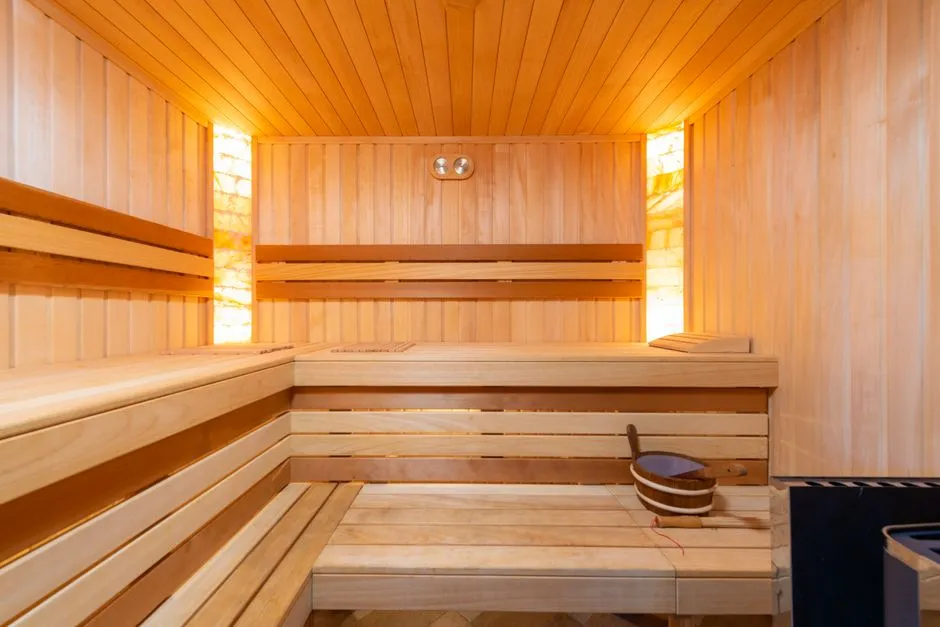
A sauna is a small wooden room heated to about 80 to 100°C with dry air, used in short sittings to sweat and relax. The research on sauna benefits is interesting but thinner than the marketing suggests: a large Finnish study links frequent use with fewer heart deaths, and a review of 40 studies found “potential health benefits”, mostly from small trials.
Here is what the studies actually found, how to use a sauna safely, who should skip it, and the myths worth ignoring.
This is general information for healthy adults, not medical advice. If you have a heart condition, high blood pressure, are pregnant or take regular medication, check with your doctor before using a sauna.
What the research on sauna benefits found
The Finnish heart study. Researchers followed 2,315 men aged 42 to 60 in eastern Finland for a median of 20.7 years. Compared with men who used a sauna once a week, men who used it 4 to 7 times a week had a lower risk of sudden cardiac death (hazard ratio 0.37) after adjusting for other risk factors (Laukkanen et al., 2015). The authors called it an association and said more studies were needed to find the cause.
That matters. Men who sit in a sauna most days may also be healthier, richer or more relaxed in ways a study cannot fully adjust for. The study also only included middle-aged Finnish men.
The review of 40 studies. A systematic review of regular dry sauna use found 40 clinical studies with 3,855 people. Only 13 were randomised controlled trials, and most were small (Hussain and Cohen, 2018). Its conclusion: “Regular dry sauna bathing has potential health benefits.” The authors asked for better trials and better reporting of side effects.
| Claim you will see | What the evidence supports |
|---|---|
| “Sauna protects your heart” | Linked with fewer heart deaths in one large Finnish cohort. Not proven to cause it. |
| “Sauna lowers blood pressure” | Possible; studied in small trials. Not a treatment. |
| “Sauna speeds up recovery” | Not well tested. Many people feel looser and more relaxed. |
| “Sauna burns fat” | No. You lose water, not fat. |
| “Sweat cleans your body out” | No. Your liver and kidneys do that job. |
The honest summary: a sauna is a pleasant habit that may have some health benefits. It is not a treatment for anything.
How to use a sauna safely
The review describes traditional Finnish saunas as “short exposures (5−20 minutes) at temperatures of 80°C–100°C with dry air” at 10 to 20% humidity. Infrared saunas run cooler, at about 45 to 60°C (Hussain and Cohen, 2018).
- Drink a glass of water before you go in. Have more afterwards.
- Start short. Begin at the low end of the 5 to 20 minute range. You can build up over weeks.
- Sit on the lower bench first. The air is hotter higher up.
- Leave straight away if you feel dizzy, sick, a headache or a racing heart. Sit down outside, cool off and drink water.
- Cool down between rounds. A lukewarm shower is enough. Two or three short rounds are better than one long one.
- Never go in after alcohol, and never alone if you feel unwell.
- Take off jewellery and glasses. Metal gets very hot.
After a gym session, cool down for about ten minutes first. You are already hot and have lost fluid through sweat, so keep the first sitting short.
Why alcohol and a sauna don’t mix
A Finnish study of deaths in saunas from 1990 to 2002 found they were rare, at less than 2 per 100,000 people a year, in a country with about 2 million saunas for 5.2 million people. But half of the people who died were under the influence of alcohol. The authors said prevention should focus on drinking less and not leaving a drunk bather alone (Kenttämies and Karkola, 2008). After a Dashain or Tihar party, skip the sauna.
Who should skip the sauna
Ask your doctor before using a sauna if you:
- are pregnant
- have a heart condition, including chest pain, a recent heart attack or heart failure
- have uncontrolled high or low blood pressure
- take medicine that affects blood pressure, heart rate or sweating
- have epilepsy, kidney disease or another long-term condition
Skip it on the day if you:
- have been drinking alcohol
- have a fever, a cold with a temperature or diarrhoea
- feel dizzy or have not eaten or drunk all day
The 2018 review notes that heart strain is a known risk, “especially in patients with unstable coronary artery disease” (Hussain and Cohen, 2018).
Sauna myths: fat, sweat and “cleansing”
Myth: a sauna burns fat. The weight you lose in a sauna is water. It comes back as soon as you drink, and you should drink it back. Fat loss comes from a calorie deficit and training; see our diet plan for weight loss.
Myth: sweat cleans out your body. Sweat is mostly water and salt. Your liver and kidneys clear waste. Sweating more does not do their job for them.
Myth: longer is better. The Finnish study linked longer sittings with lower risk, but it describes what Finnish men did, not a target. Feeling unwell in the heat is a sign to get out, not to push on.
What to check in a gym sauna in Kathmandu
In January 2020 two people died in a gym sauna in Lalitpur. Police said carbon monoxide from a gas geyser in the locked sauna was the cause (Kathmandu Post, 2020). Before you use any sauna, ask:
- Is the heater electric? No gas appliance should be inside or vent into the room.
- Does the door open outwards and never lock from outside?
- Is there a timer, a thermometer and a clock you can see?
- Does someone from staff check the room regularly?
If a gym cannot answer these, use the shower and go home. Our sauna and steam page lists how ours is set up. If you have one of the conditions above and your doctor says no, we would rather you skipped it.
Sauna or steam room?
A sauna uses dry heat at 80 to 100°C. A steam room is cooler but much more humid; the review notes that humid heat leaves water condensing on the skin and less sweat evaporating. The review above did not include steam rooms, and it says it is unclear whether steam causes the same body responses as dry heat. See steam bath for the comparison.
If you are using the sauna as part of a training week, put the effort into the sessions themselves: strength training or HIIT do the work, and the sauna is the wind-down.
Want a plan built around this? Sauna and steam, or work out your numbers with the calorie calculator.
Sources
- Laukkanen et al., JAMA Internal Medicine: sauna bathing and mortality, 2015
- Hussain and Cohen, Evid Based Complement Alternat Med: clinical effects of regular dry sauna bathing, 2018
- Kenttämies and Karkola, J Forensic Sci: death in sauna, 2008
- Kathmandu Post: couple dies in a gym sauna in Lalitpur, 2020

Suraj Lama, head trainer. Suraj runs the training floor and writes the starter plan every new member leaves their free session with. Most of his members are office workers who train before 8 AM.
Published 29 October 2026 · Updated 29 October 2026 · Reviewed by Qualified nutrition professional (to be named)