Fat loss
Diet plan for weight loss: a 7-day Nepali meal plan
 By Ritu Maharjan, nutrition coach, 5 years training members
Updated
Reviewed by: Qualified nutrition professional (to be named)
In short
- A diet plan for weight loss works when it puts you in a steady calorie deficit you can repeat. You don't need to quit dal bhat; you need a smaller plate of rice and more protein next to it.
- The 7 days below land between 1,425 and 1,649 kcal and 72 to 92 g of protein a day, using values from Nepal's Food Composition Table (DFTQC 2012).
- It is general guidance for healthy adults, not a prescription. For your own number, use the calorie calculator.
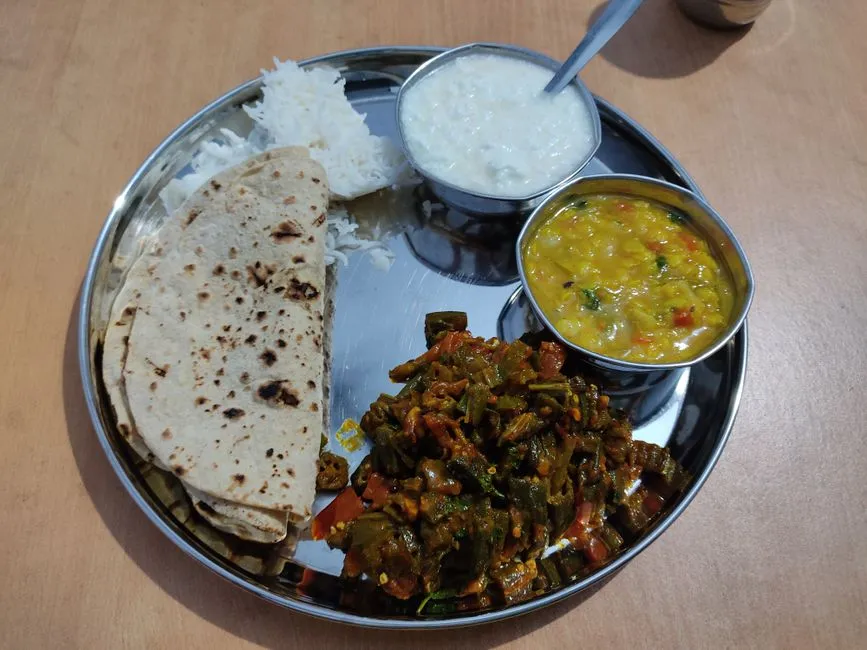
A diet plan for weight loss is a week of meals that keeps you a little under your daily calorie needs, with enough protein to stay full and keep muscle. For most people in Kathmandu that means the same dal bhat, roti, chiura and dahi you already eat, with less rice on the plate and an egg, chana or a piece of meat beside it. The 7-day plan below shows exactly what that looks like, with calories and protein for each day.
Who this plan is for, and who should skip it
This is general guidance for healthy adults. It is not a prescription and it can’t know your weight, your job or your health.
Skip it and see a doctor or a hospital dietitian if you are under 18, pregnant or breastfeeding, have diabetes, kidney disease, high blood pressure on medication, or a past eating disorder. Those need a plan written for you.
If you just want your own calorie number first, the calorie calculator gives an estimate for healthy adult men aged 19 to 78. It doesn’t cover women yet; the ranges in the next section do.
How many calories a day this plan gives
The seven days land between 1,425 and 1,649 kcal, with 72 to 92 g of protein.
The AHA/ACC/TOS obesity guideline suggests 1,200 to 1,500 kcal a day for women and 1,500 to 1,800 for men as a usual weight-loss range, adjusted for body weight. So:
- Smaller women and less active people: follow the plan as written.
- Men, taller or more active people: add one roti (87 kcal) or 100 g more rice (129 kcal) to lunch or dinner on the days under 1,500.
- Never go below 800 kcal a day without a doctor. The same guideline says very-low-calorie diets need medical supervision.
For protein, the International Society of Sports Nutrition says 1.4 to 2.0 g per kg of body weight a day is enough for most people who exercise. A 70 kg person training in the gym would sit at 98 to 140 g. This plan gives less than that for most people who lift, because it is a base. If you train, add an egg, a bowl of dahi or more dal; the daily protein guide shows how.
Where the numbers come from
Every value comes from the Food Composition Table for Nepal (Department of Food Technology and Quality Control, 2012), read item by item, with boiled egg and chicken breast from the Indian Food Composition Tables 2017.
Two honest limits:
- The DFTQC table says its values are a rough guide, with an error of about ±10%. Home cooking differs from a lab recipe.
- The portion weights below are our assumptions, not survey data. Weigh them once at home so you know what they look like.
The portions used in this plan
| Food | Portion | kcal | Protein (g) |
|---|---|---|---|
| Cooked rice (bhat) | 150 g (a smaller plate) | 194 | 3.8 |
| Thin dal | 1 katori, 150 g | 73 | 4.9 |
| Thick dal (60 g dry masoor) | 1 katori | 206 | 15.1 |
| Mixed tarkari | 150 g | 92 | 2.9 |
| Saag, cooked | 100 g | 61 | 2.0 |
| Chana tarkari | 1 katori, 150 g | 190 | 8.9 |
| Roti | 1 roti, 40 g | 87 | 3.2 |
| Chiura | 50 g | 173 | 3.3 |
| Boiled egg | 1 egg | 74 | 6.7 |
| Dahi (curd) | 1 bowl, 200 g | 120 | 6.2 |
| Cow milk | 1 glass, 250 g | 168 | 8.0 |
| Chiya, no sugar | 1 cup (50 g milk) | 34 | 1.6 |
| Roasted bhatmas | 30 g | 123 | 10.0 |
| Paneer | 50 g | 166 | 11.8 |
| Nutrela (soy chunks) | 30 g dry | 99 | 14.1 |
| Chicken breast, skinless | 100 g raw | 168 | 21.8 |
| Buff, lean | 150 g raw | 129 | 29.1 |
| Khasi (goat), lean | 100 g raw | 118 | 21.4 |
| Ghee for cooking meat | 1 teaspoon, 5 g | 45 | 0 |
Sources: DFTQC 2012 rows P1 to P7, A26, M2, M3, M7, B25, B34, B41, J1, J8, N2; IFCT 2017 M004 (egg) and N003 (chicken). Fruit: banana 116 kcal, apple (150 g) 88 kcal, boiled makai (100 g) 125 kcal.
The 7-day diet plan for weight loss
Each day has four meals: breakfast, office or home lunch, a 4 pm snack and dinner. Swap whole days around as you like.
Day 1: eggs and chicken (1,435 kcal, 89 g protein)
- Breakfast: chiya without sugar, 2 boiled eggs, 1 roti.
- Lunch: dal bhat tarkari with 150 g rice, plus a bowl of dahi.
- Snack: chiya without sugar, 30 g roasted bhatmas.
- Dinner: 2 roti, 150 g chicken breast cooked with 1 teaspoon of ghee, saag.
Day 2: thick dal day (1,649 kcal, 72 g protein)
- Breakfast: 50 g chiura with a bowl of dahi and a banana.
- Lunch: 150 g rice, a katori of thick dal, tarkari, 2 boiled eggs.
- Snack: chiya without sugar, 30 g roasted bhatmas.
- Dinner: 150 g rice, chana tarkari, saag.
Day 3: buff day (1,425 kcal, 92 g protein)
- Breakfast: chiya without sugar, 2 boiled eggs, 1 roti.
- Lunch: dal bhat tarkari with 150 g rice, plus 2 boiled eggs (most canteens sell them).
- Snack: an apple, 30 g roasted bhatmas.
- Dinner: 2 roti, 150 g lean buff cooked with 1 teaspoon of ghee, tarkari.
Day 4: vegetarian (1,632 kcal, 78 g protein)
- Breakfast: 50 g chiura with a bowl of dahi and an apple.
- Lunch: 150 g rice, chana tarkari, saag, a bowl of dahi.
- Snack: chiya without sugar, 30 g roasted bhatmas.
- Dinner: 2 roti, tarkari cooked with 50 g paneer and 30 g Nutrela.
Day 5: milk and makai (1,486 kcal, 77 g protein)
- Breakfast: a glass of milk, 1 roti, 1 boiled egg.
- Lunch: dal bhat tarkari with 150 g rice, plus 100 g chicken breast cooked with 1 teaspoon of ghee.
- Snack: 100 g boiled makai.
- Dinner: 150 g rice, a katori of thick dal, saag.
Day 6: momo day (1,454 kcal, 80 g protein)
- Breakfast: chiya without sugar, 2 boiled eggs, a banana.
- Lunch: one plate of steamed chicken momo (10 pieces, about 250 g: 515 kcal, 24.5 g protein).
- Snack: a bowl of dahi.
- Dinner: dal bhat tarkari with 150 g rice, plus 100 g lean khasi cooked with 1 teaspoon of ghee.
Day 7: easy Saturday (1,480 kcal, 78 g protein)
- Breakfast: chiya without sugar, 50 g chiura, 2 boiled eggs.
- Lunch: dal bhat tarkari with 150 g rice, a bowl of dahi.
- Snack: 30 g roasted bhatmas.
- Dinner: 2 roti, chana tarkari cooked with 30 g Nutrela, saag.
Momo pieces vary a lot between shops; the 25 g a piece we used is an assumption. Achar, extra ghee and the second helping of rice are not counted, so count them if you have them.
Office canteen swaps
Most office lunches in Kathmandu are dal bhat or a fried snack with chiya. These swaps cut calories without leaving you hungry at 4 pm.
| Instead of | Have | What changes |
|---|---|---|
| A full 250 g plate of rice | 150 g rice and a second katori of dal or tarkari | 129 kcal less |
| Chiya with 2 teaspoons of sugar (10 g) | Chiya without sugar | about 40 kcal less a cup |
| 1 samosa (60 g, 179 kcal) | 2 boiled eggs (148 kcal) | 31 kcal less, 10.6 g more protein |
| 1 plate of buff momo (538 kcal) | 1 plate of chicken momo (515 kcal) or veg momo (370 kcal) | 23 to 168 kcal less |
| A packet of Wai Wai (75 g, 357 kcal) | 30 g roasted bhatmas and an apple (211 kcal) | 146 kcal less |
On sugar: the WHO advises keeping free sugars under 10% of daily energy, and ideally under 5%, which it puts at about 25 g, or 6 teaspoons. Three sweet chiyas a day at 2 teaspoons each already reach that.
Festivals: Tihar, Dashain and Teej
Tihar holidays run from 8 to 12 November 2026. Nobody follows a diet plan through Bhai Tika, and you don’t need to.
- Plan the days, not the whole week. Eat normally on the two or three big days; follow the plan on the others.
- Sel roti and jeri: our food table’s sel roti figure doesn’t add up, so we won’t print one. Jeri is 222 kcal per 50 g. One piece with tea is fine; a plate on the side every day for a week is where the weight comes from.
- Meat days: khasi and buff are lean on their own (118 and 86 kcal per 100 g raw). Most of the calories in a festival curry come from the oil and the rice next to it.
- Teej fasting: if you fast, don’t run the plan that day. Break the fast with a normal meal, not a double one. If you have diabetes or take medication, ask your doctor before fasting.
How to know the plan is working
Weigh yourself on the same scale, first thing in the morning, two or three times a week, and look at the weekly average. Day-to-day numbers jump with salt, water and rice.
If your average hasn’t moved after three weeks of following the plan most days, take 100 g of rice off one meal a day. If you are losing more than about 1% of your body weight a week, eat more, because a review of research on dieting lifters recommends 0.5 to 1% a week to keep as much muscle as possible.
Food does most of the work, but training decides whether the weight you lose is fat or muscle. Our guide to weight loss in Kathmandu covers steps and strength training, and weight loss foods has a bigger table of Nepali foods ranked by protein per calorie.
When a plan on a page isn’t enough
A written plan can’t see whether you’re hungry by 11 am, whether night shifts break it, or whether your knees hate the stairs. If you have tried twice and stopped both times, that is a sign you need someone checking in, not a better PDF.
That is what our trainers do: set your calories from your own numbers, adjust the plan every few weeks, and build the training around it. Lose fat with a personal trainer if you want that help. If you are happy cooking from the plan above and walking more, you don’t need us yet.
See a doctor before changing your diet if you have any long-term condition, take regular medication, feel dizzy or faint while dieting, or lose weight without trying.
Want a plan built around this? Lose fat with a personal trainer, or work out your numbers with the calorie calculator.
Sources
- DFTQC: Food Composition Table for Nepal, 2012
- ICMR-NIN: Indian Food Composition Tables, 2017
- Jensen et al.: AHA/ACC/TOS guideline for the management of overweight and obesity, 2014
- Jäger et al.: ISSN position stand, protein and exercise, 2017
- WHO: guideline on sugars intake for adults and children, 2015

Ritu Maharjan, nutrition coach. Ritu turns a member’s goal into meals that fit dal bhat, office canteens and family festivals. Medical diets go to a doctor.
Published 29 October 2026 · Updated 29 October 2026 · Reviewed by Qualified nutrition professional (to be named)